TFT scouting guide: playing the lobby, not the board
The information that decides your placement is on other people's boards. Scouting is the habit of going and getting it, at moments you choose in advance.
Why scouting wins games
Every decision in the last six chapters needed information you don't have on your own board. Whether to roll depends on how contested you are. Whether to pivot depends on what's open. How to position depends on who you're fighting. Whether to level depends on whether you'd survive not levelling.
All of that is sitting on seven other boards, visible, for free, right now. The gap between players isn't access to the information — it's the habit of going to look.
It also compounds in a way nothing else does. Gold spent is gone; a scouted board tells you something about the next five rounds. The player who knows at 3-2 that two people are on their carry has saved themselves a 40-gold rolldown they were going to lose.
The checkpoints
The failure mode of "scout more" is scouting constantly and absorbing nothing, or scouting when you're calm and forgetting when you're not. Fix it with fixed checkpoints — a schedule you follow whether or not you feel like it.
| When | What you're looking for | Takes |
|---|---|---|
| Every planning phase | Your next opponent's board. Their biggest threat, so you can position. | 5 seconds |
| Once per stage | All seven boards. Who's on your units, who's winning, what's open. | 20 seconds |
| Before every rolldown | Copies of your carry held by others. Non-negotiable. | 15 seconds |
| Before levelling | Whether anyone is about to spike past you, and whether you can afford the round. | 5 seconds |
| After any carousel | Who took what. Item direction is the earliest signal of comp direction. | 10 seconds |
The stage-4 planning phases are the ones people skip, because that's when they're rolling and the shop feels urgent. Those are precisely the phases where scouting is worth the most gold.
What to look at
A board contains far more than its units. In rough order of how much each tells you:
Items — the earliest and strongest signal
Items are committed two stages before a comp is obvious. Three attack-damage items on a board means that player is going somewhere physical, and you'll know which carry before they've bought it. A Tear held on the bench means a caster. Nobody builds items they won't use.
The bench, not just the board
The bench is the plan. Two copies of a 4-cost sitting on someone's bench at 3-6 tells you they're rolling for it at 8 and you should not be. The board is what they're playing; the bench is what they intend to play.
Star levels on your units
A 2★ of your carry on someone else's board is three copies gone from the pool. Two of those and your rolldown has changed shape entirely — see the contested maths.
Level and health together
Level 8 at 3-6 with 40 health means someone spent everything and is about to either win the lobby or die. Level 6 at 90 health means a player sitting on 70 gold who is going to be very strong at 4-2. Both are things you'd want to know before deciding your own tempo.
Positioning — theirs, so you can answer it
Where their carry stands decides where yours should. It's the last thing to check because it's the one most likely to change, but against a player who never moves it's free damage.
Don't try to absorb eight boards. Go in with a single question — "who else has my carry?", "who beats me next round?", "is this trait open?" — and look only for the answer. Directed scouting takes a fraction of the time and you actually retain it.
Acting on what you see
Information you don't act on is just anxiety. Four common findings and the decision each one should trigger:
| What you see | What it means | Do this |
|---|---|---|
| Two players holding your 4-cost carry | Your rolldown costs roughly double and may just fail | Pivot now, while your items still transfer — see pivoting |
| A trait nobody is playing | Uncontested units, cheap to three-star, no competition at carousel | Consider it seriously even if it's B-tier. Open beats strong. |
| Your next opponent has a fed assassin | Your corner carry dies in two seconds | Clump your board this round only — anti-assassin shape |
| Three players below 20 health | The lobby is about to shrink and top 4 is nearly locked | Stop risking health. Play for placement, not for first. |
Notice the last row. Scouting isn't only about units — the health bars tell you what kind of game you're in. When three players are nearly dead, the correct play changes from "maximise my ceiling" to "do not be fifth", and that switch is worth more LP over a season than any comp knowledge.
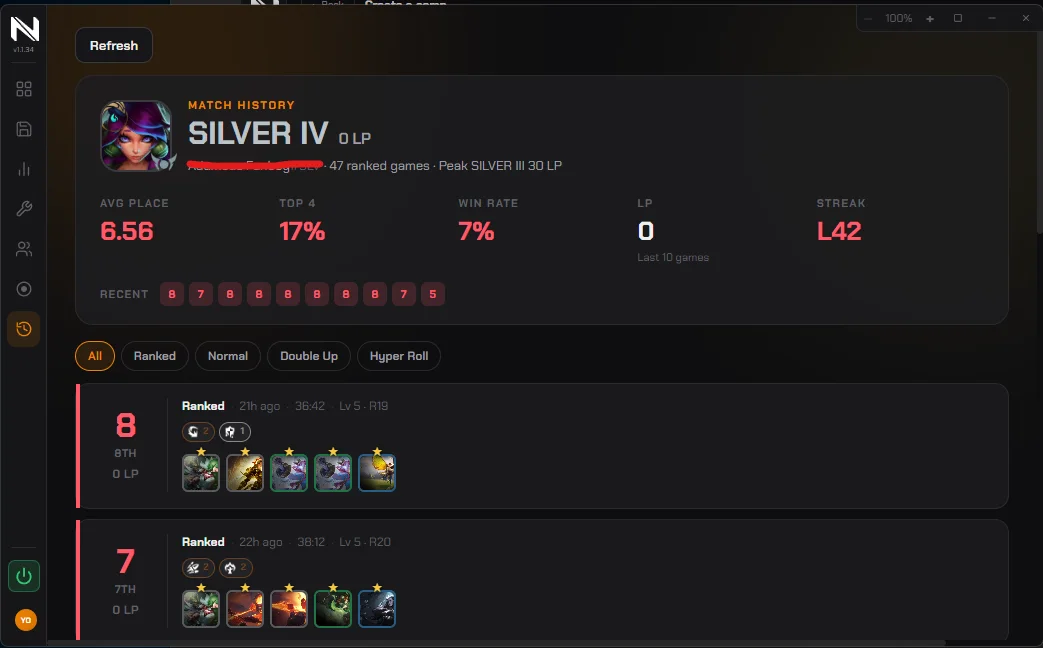
There is one thing scouting cannot give you: how many copies of a unit are left in the pool overall, because units sold back and units never bought are invisible. You can estimate it by counting what you see across eight boards, which is exactly the sort of arithmetic that gets skipped at 4-1. That's the gap the pool counter exists to fill.
You've now covered every decision the planning phase asks. The next chapter goes under the hood — what actually happens when the fight starts, and why it changes your item choices.